

September 9, 2026
News
War takes away more than homes and possessions. It uproots lives — family traditions, years of work, familiar faces and plans for the future. ‘Every day I wake up waiting for the news that we can finally go home,’ says Liliia, 65, from Kramatorsk. Nadiia, a young mother from Kryvyi Rih, is living with the same uncertainty. Natalia from Donetsk has lost her home twice, yet found the strength to keep moving forward. Their stories are about rebuilding life and finding hope.
Gratitude and a sewing
We met Natalia at the dormitory of Berehovo Lyceum of Services in Zakarpattia. Together with our partners, we renovated and equipped the building to provide safe, comfortable accommodation for 180 evacuees. This is where Natalia found shelter with her three younger children, as well as a chance to recover from the horrors they had experienced.
More and more villages are coming under attack, but people have nowhere to go. I am grateful to be here and for the good living conditions,
says Natalia.
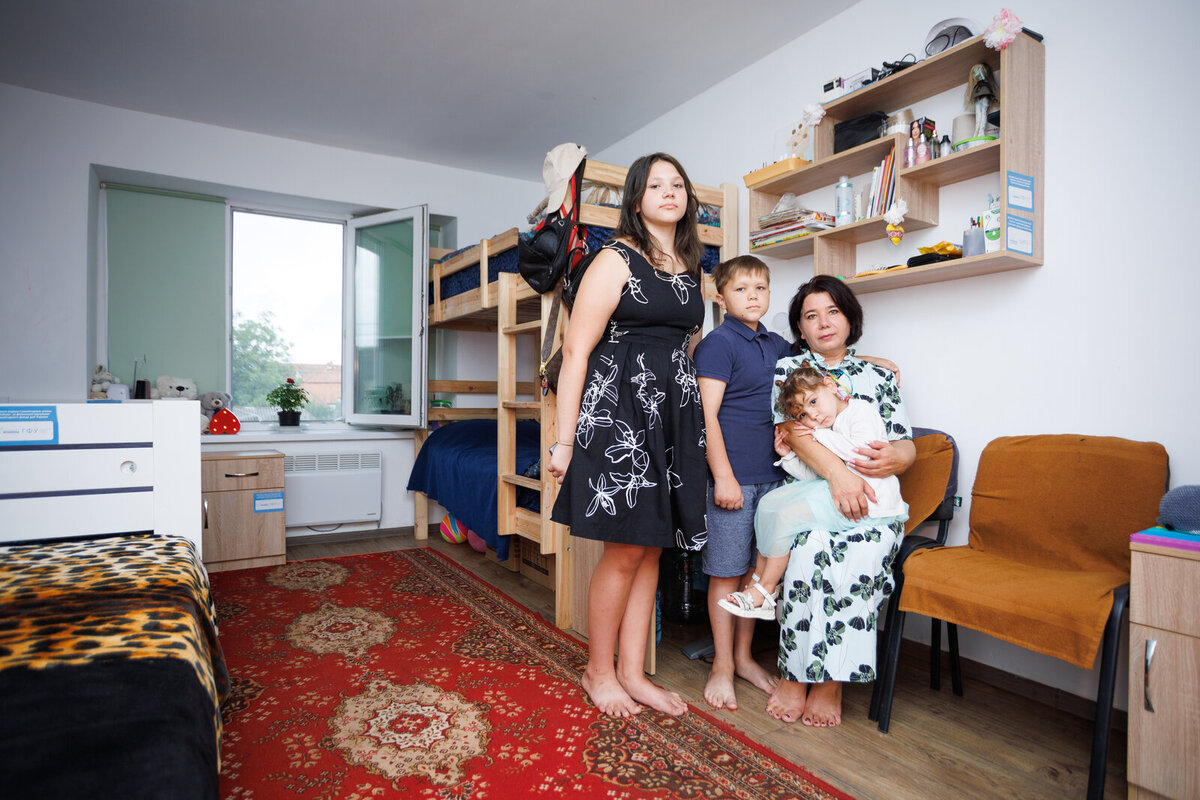
She has four children, aged between four and 24, two of whom have disabilities. Natalia cares for them on her own. Her family has been caught up in the war twice — first in Donetsk, occupied by Russian troops in 2014, and now in the frontline village of Novopavlivka in Dnipropetrovsk region, almost destroyed by relentless fighting.
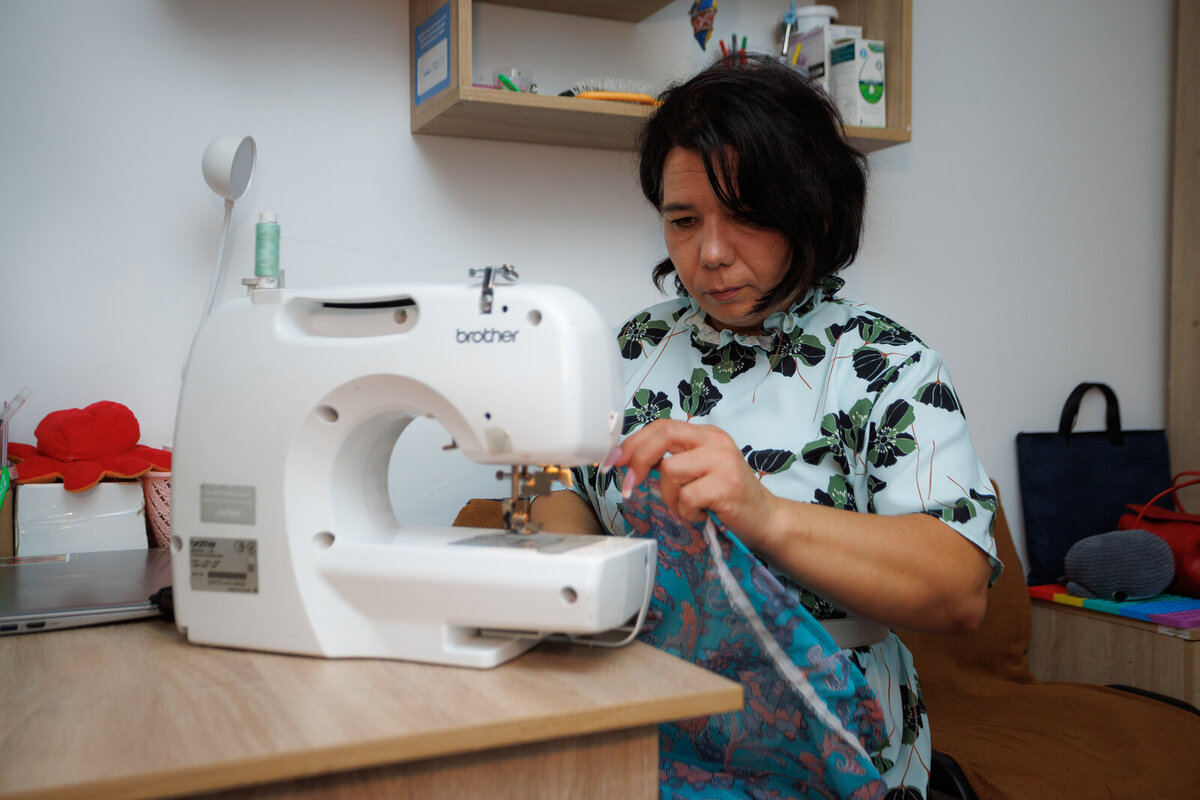
In Berehovo, Natalia draws strength from her children and sewing. She lights up when she talks about it.
I love sewing. I sew and mend clothes. It takes my mind off my worries. It gives me a sense of purpose and lets me dream of the day I’ll see my whole family again,
Natalia shares.
In her small, cosy dorm room, the rhythmic hum of her sewing machine and overlocker fills the space. She salvaged both from her ruined home.
A friend becomes a new family
Liliia arrived at temporary accommodation in Kryvyi Rih, Dnipropetrovsk region, on an evacuation bus. We met her while replacing the dormitory’s windows damaged by explosions, helping residents prepare for winter.
I spent my whole life in my hometown. Now, at 65, I have moved hundreds of kilometres away. It is hard for me,
says Liliia.
After her husband’s death, Liliia is completely on her own. Her children and relatives have scattered across the country. The familiar hugs and get-togethers have given way to telephone calls.
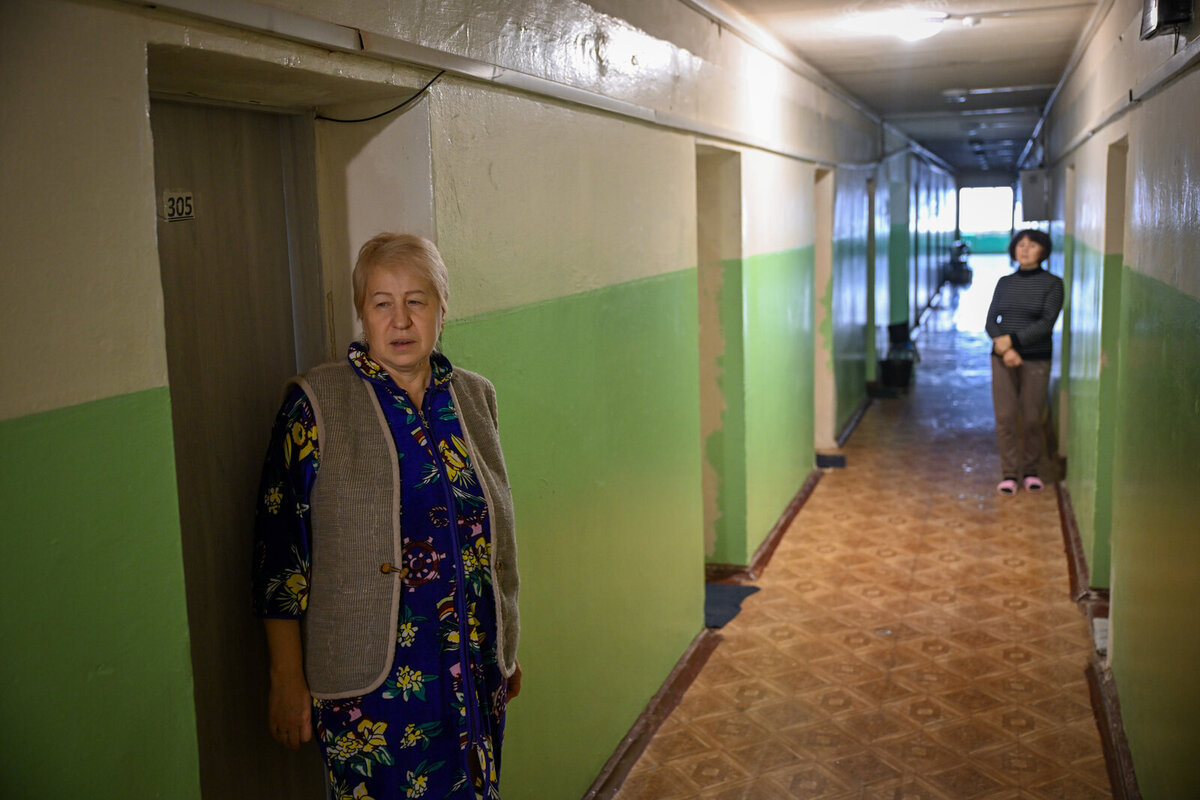
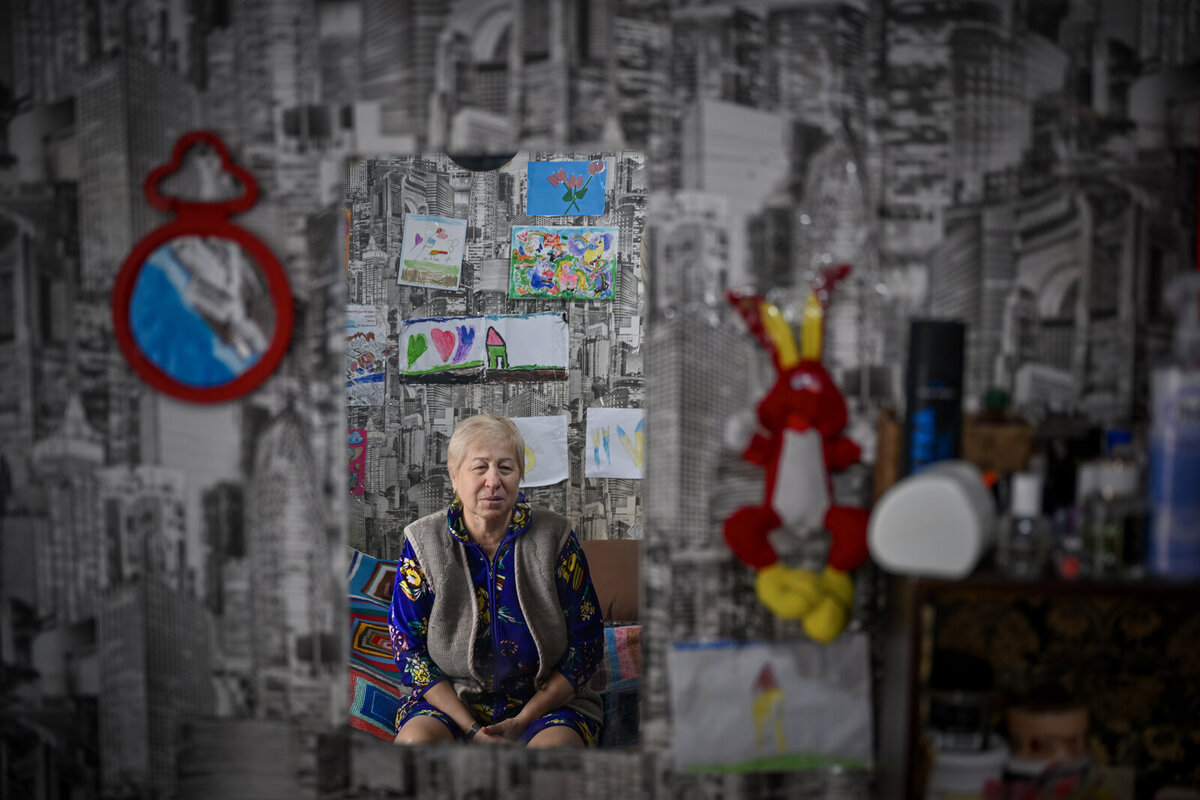
She fled from Kramatorsk in the Donetsk region. It is 10 kilometres from the frontline. Once a beautiful and thriving industrial city, it is now shrouded in smoke and constant danger.
In the dormitory, Liliia has a friend whose company helps her recover after hearing news of destruction and loss.
She is my joy here — someone I can talk to, someone who supports me. We are like a family here. We hope that we will return home and that everything will be all right,
Liliia concludes.
A son and a fluffy cat
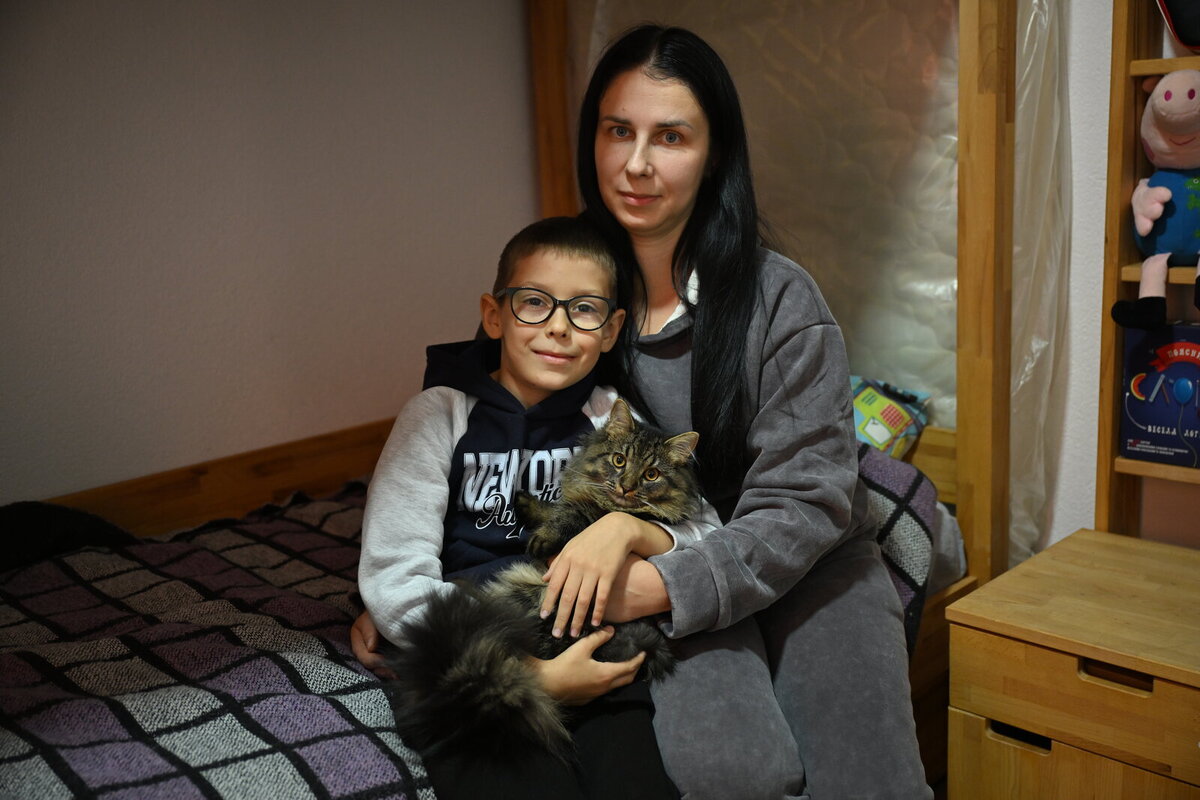
Seven-year-old Timur, his mum Nadiia, and their cat Marsyk live in a one-bedroom house in a modular settlement in Mukachevo built by Caritas Czech Republic.
Before the war, Nadiia’s happy family life was in full bloom in Kryvyi Rih. Her parents were nearby. She had just returned to work after maternity leave. And then her life suddenly changed.
I hadn’t planned to flee. I wanted to stay at home,
says Nadiia.
However, it was becoming too dangerous to stay with the child. Her husband, a soldier, was unable to accompany the family – his duties left him no choice. Her parents decided to stay as well.
Despite the relative safety in Mukachevo, Nadiia doesn’t make plans for the future. ‘We’re taking each day as it comes: I live with what I have right now,' says the young mum.
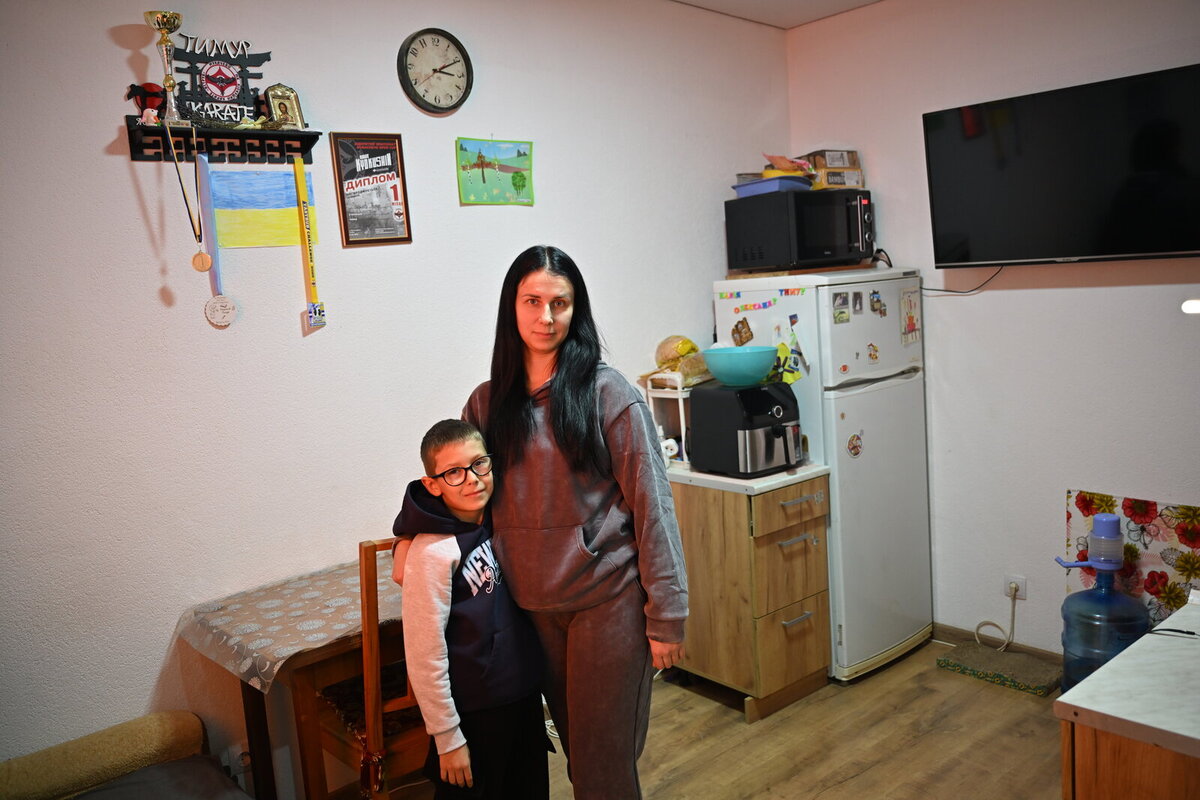
As we talk, Nadiia hugs Timur. He is one of her greatest sources of strength — alongside his karate training, speech therapy and beloved pet, Marsyk. Before we leave, Timur gathers the courage to share his dream.
I dream that the war will end, and that we’ll go to Kryvyi Rih to see Grandma and Grandad,
the boy said.
Caritas Czech Republic in Ukraine
We have been helping Ukrainian families since 2022. We provide decent accommodation for war-affected people in modular settlements and refurbished dormitories in the west. We are also currently repairing six compact accommodation sites in the Dnipropetrovsk region in the east. Together with our partners, we provide psychosocial support to evacuees, including those who have been victims of gender-based and sexual violence.
In addition, we modernised six rehabilitation centres in the Dnipropetrovsk region and supported the creation of a network of mental health centres. Those centres provide free psychological support to both children and adults.
Now, the public fundraising campaign Caritas for Ukraine will support psychological care for children affected by the war, their families, and other vulnerable groups. To this end, we are renovating the Children’s Mental Health Centre in Lviv and strengthening coordination between these institutions and local organisations to develop an effective referral system.